SIM stands for Subscriber Identity Module. Physically it is a smart card: a plastic carrier with a gold-plated contact area on the face, and the card is made of the same material family as a bank card. The card sizes below follow ETSI TS 102 221; the contact positions follow ISO/IEC 7816-2. KINGCONN socket figures come from the drawings on the part pages.
SIM form factors: 1FF, 2FF, 3FF, 4FF
Every generation kept the same contact area and cut away plastic around it, which is why a nano SIM still works in a 2FF phone with an adapter frame:
- 1FF — 85.6 × 54.0 × 0.76 mm. The original credit-card SIM, still used as the break-out carrier the smaller cards ship inside.
- 2FF, mini SIM — 25.0 × 15.0 × 0.76 mm. The size most industrial and telematics equipment still specifies.
- 3FF, micro SIM — 15.0 × 12.0 × 0.76 mm.
- 4FF, nano SIM — 12.3 × 8.8 × 0.67 mm. Thinner as well as smaller, so a 4FF card in a 3FF socket sits low in the contact area — that is why adapters cause intermittent faults.
eSIM moves the same function into a soldered-down package. It removes the socket, and with it the field-swap the socket exists for. Equipment that has to change carrier in the field keeps a socket.
SIM card pinout: C1 to C8
ISO/IEC 7816-2 numbers the contact area C1 to C8. Their functions:
- C1 VCC — supply.
- C2 RST — reset.
- C3 CLK — clock.
- C4 — reserved in the base standard; used as a USB data line in later profiles.
- C5 GND — ground.
- C6 VPP — programming voltage in the base standard; carries SWP for NFC in later profiles.
- C7 I/O — the serial data line.
- C8 — reserved in the base standard; the other USB data line in later profiles.
A plain SIM interface therefore needs C1, C2, C3, C5, C7 wired. That is why 6-contact sockets exist and are enough for most designs.
What a SIM socket has to carry
Published contact counts across the KINGCONN mini, micro and nano SIM families are 6, 7 and 8 positions. The counts above 6 are not extra card signals — they are the card-detect switch and the ground terminals of the metal cover. 7SIMC-F0-0043 is published at 7 positions with a card-detect pin; 7SIMC-FA-0006 is a 2FF push-push socket at 1.8 mm profile. Decide whether firmware needs to distinguish "no SIM" from "SIM rejected" before layout — retro-fitting a detect pin is a new footprint.
Tray, holder, socket: the words are not the same part
A SIM tray or SIM plate is the small metal or plastic drawer a phone ejects with a pin. It holds the card; it has no contacts. The part on your board is the socket (also SIM card connector or SIM card holder), which carries the spring contacts. If you are designing a product, the tray is a mechanical part of your enclosure and the socket is the component you buy.
Socket mechanisms in the KINGCONN catalog:
- Push-push — insert to latch, push to eject; needs an access slot in the enclosure.
- Push-pull (no-push) — the card is pulled out; shortest body, nothing to launch the card out under vibration. 7SIMC-F0-0030 at 1.35 mm.
- Hinge (flip) — a lid closes over the card; used where the SIM is fitted at assembly. 7SIMC-F0-0023 at 1.40 mm.
Heights, durability and materials
Published profile heights are 1.8 mm for the mini SIM family, 1.42 and 1.50 mm for micro SIM, and 1.25 to 1.40 mm for nano SIM. Durability is published at 3,000 or 5,000 insertion cycles. Contacts are copper alloy, housings LCP or high-temperature thermoplastic rated UL94V-0, RoHS compliant.
KINGCONN SIM sockets
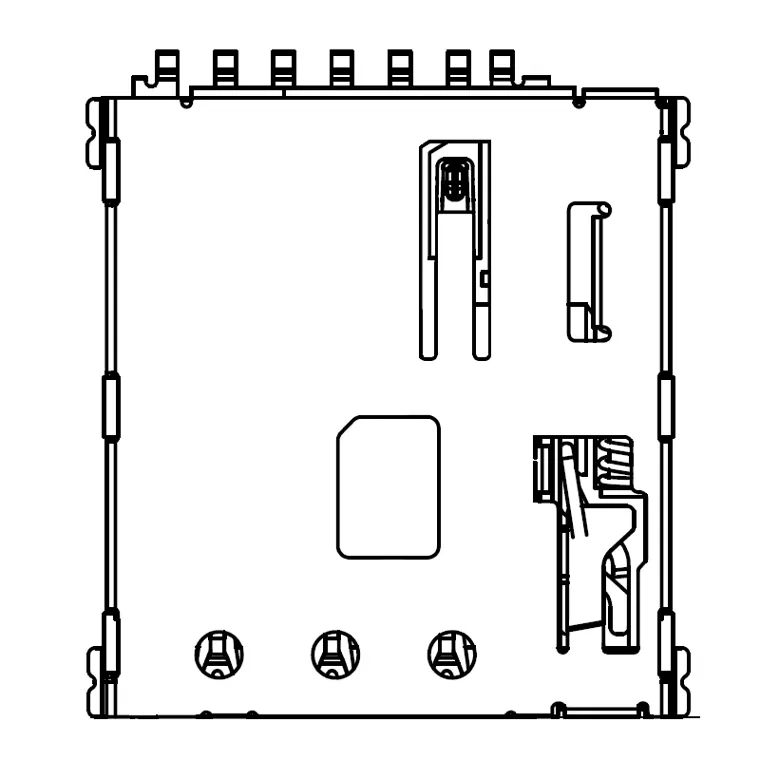 7SIMC-F0-0043Nano SIM Card Push Socket 7-Pin 1.37H with CD Pin
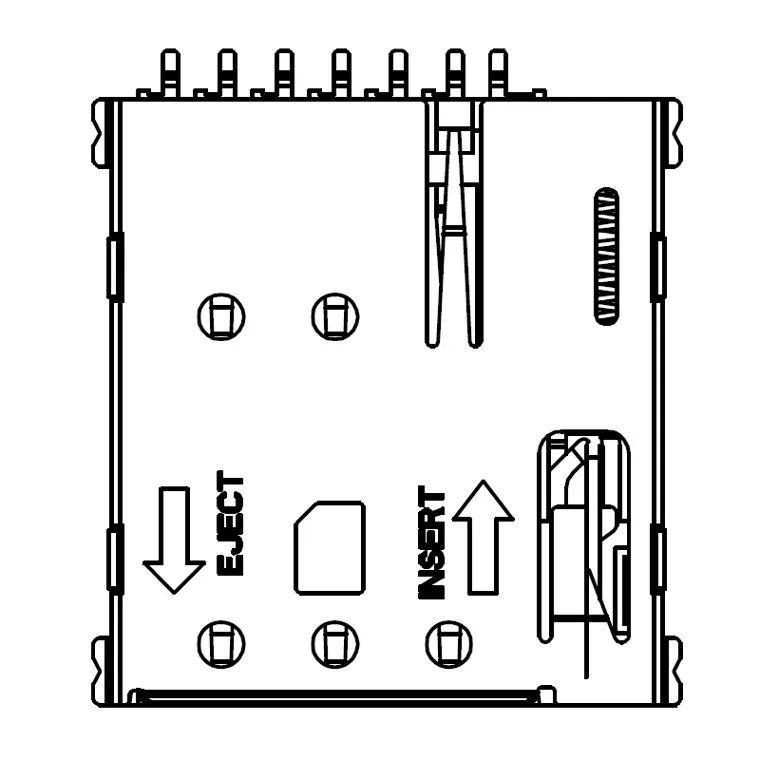 7SIMC-FA-0021SIM Card Push-Push Socket 1.35H with CD Pin
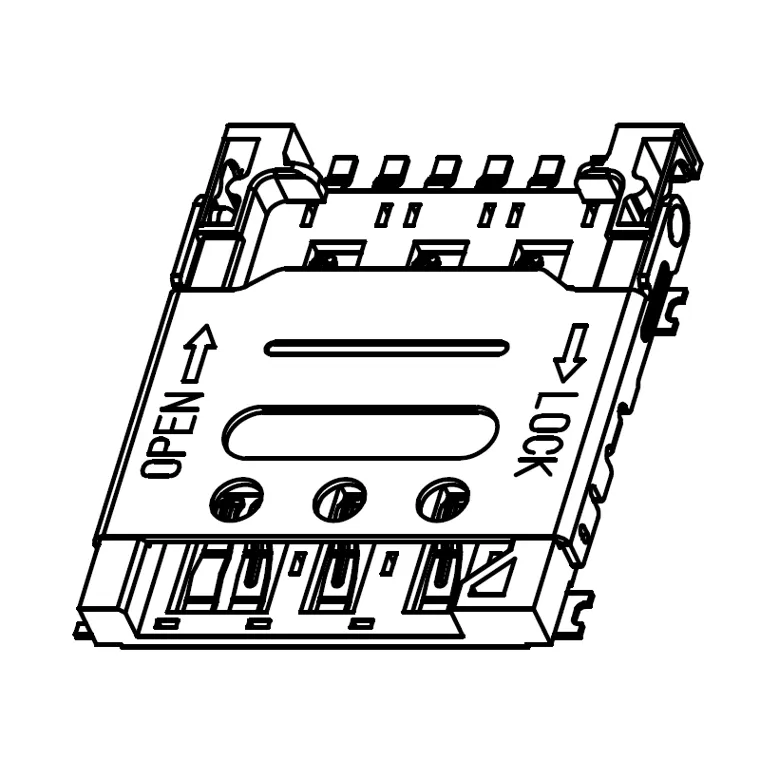 7SIMC-F0-0023Nano SIM Flip-Type Socket 1.4H
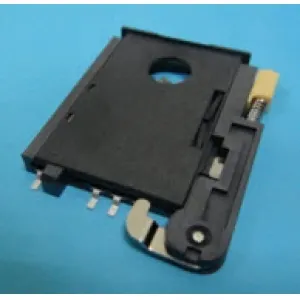 7SIMC-FA-0004Micro SIM Flip-Type Socket 1.5H
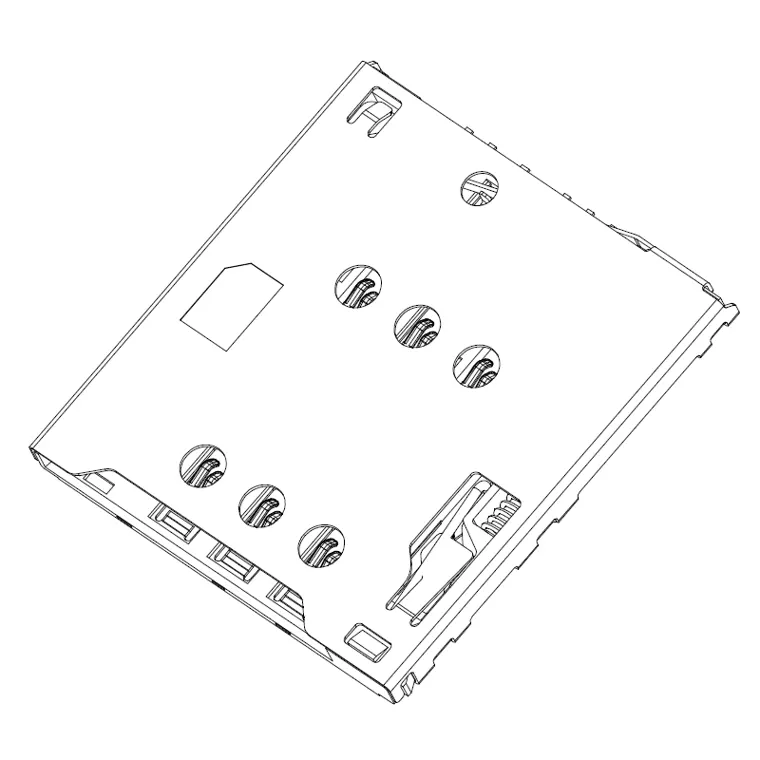 7SIMC-F0-0041Micro sim push H:1.42mm
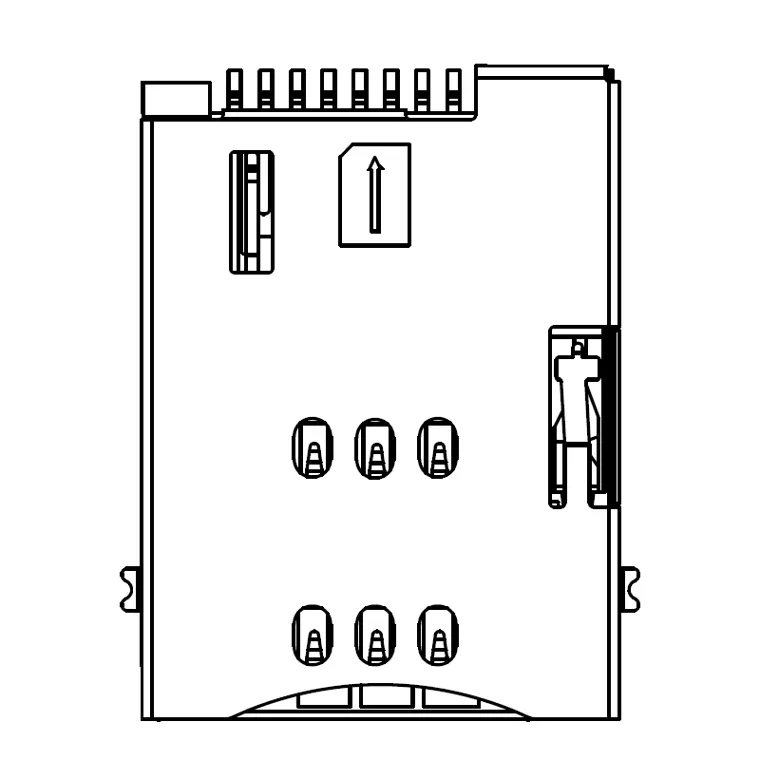 7SIMC-FA-0006SIM CARD PUSH PUS(6+2PIN) H=1.8mm
Nano, Micro and Mini SIM sockets in push-push, hinge and push-pull mechanisms, with and without a card-detect pin.
Socket positions by family
| Part number | Height (mm) | Drawing |
|---|---|---|
| 7SIMC-F0-0043 | 1.37 | 7SIMC-F0-0043-C |
| 7SIMC-FA-0021 | 1.35 | 7SIMC-FA-0021 |
| 7SIMC-F0-0023 | 1.40 | 7SIMC-F0-0023 |
| 7SIMC-F0-0030 | 1.35 | 7SIMC-F0-0030 |
| 7SIMC-F0-0014 | 1.25 | 7SIMC-F0-0014 |
| 7SIMC-FA-0004 | 1.50 | 7SIMC-FA-0004-A |
| 7SIMC-F0-0041 | 1.42 | 7SIMC-F0-0041-C |
| 7SIMC-FA-0013 | 1.8 | 7SIMC-FA-0013-A |
FAQ
What are the SIM card pins?
What are C4, C6 and C8 for?
Why does a nano SIM in a micro SIM socket lose contact?
Why do SIM sockets come in 6, 7 and 8 positions?
Will eSIM make SIM sockets obsolete?
The catalog lists 5 mini SIM (2FF), 4 micro SIM (3FF) and 7 nano SIM (4FF) sockets. For the selection question rather than the pinout question, read the SIM card connector selection guide; for the same ISO/IEC 7816 contact area at full card size, see smart card connectors. Send your form factor, height limit and detect-pin requirement to service@kingconn.com.tw.
Standards referenced:
- ETSI TS 102 221 (UICC form factors 1FF / 2FF / 3FF / 4FF)
- ISO/IEC 7816-2 (contact positions C1 to C8)