A microSD socket is chosen on 4 values: profile height, mechanism, durability class and whether it carries a card-detect switch. The KINGCONN microSD family publishes 19 models with profiles of 1.15mm, 1.28mm, 1.45mm, 1.5mm and 1.68mm, push-push, push-pull and hinge mechanisms, and 5,000 or 10,000 insertion cycles. Every value below comes from the engineering drawing published on the part page.
Profile height: the thinnest dimension wins
| Profile | What is available at this height | Typical designs |
|---|---|---|
| 1.15 mm | thinnest: push-pull (no-push), fewest moving parts | phones, modules, ultra-slim handhelds |
| 1.28 mm | both push-push and push-pull available | general modules and IoT boards |
| 1.45 / 1.5 mm | the push-push mainstream band | industrial, in-vehicle, POS |
| 1.68 / 1.75 mm | versions with an eject lever or reinforced shell | frequent user swaps, mechanical strength |
In handheld and module designs the card socket usually sits on the most height-constrained board. Pick the lowest profile your reflow and card-insertion mechanics allow — but read the mechanism column first: the thinnest parts are push-pull, so choosing 1.15mm also chooses how the user removes the card.
Durability class: 5,000 or 10,000 cycles
Insertion/withdrawal durability is the parameter that separates consumer-grade from service-heavy applications. KINGCONN microSD connectors are rated at 5,000 or 10,000 insertion cycles depending on the model — specify the higher class when the card is an end-user-replaceable medium (dashcams, industrial data loggers, POS) rather than a factory-installed one.
Push-push mechanics and card detect
Push-push (insert to latch, push again to eject) is the dominant mechanism in this family: it needs no ejector lever clearance and gives the user a positive tactile latch. Models with a card-detect switch let firmware distinguish "no card" from "card failed" — a distinction your support team will thank you for, and one that has to be decided before layout because it changes the terminal count. A representative push-push model is 7MSDP-B0-2210, the part rendered in the 3D sequence on our homepage.
KINGCONN microSD sockets
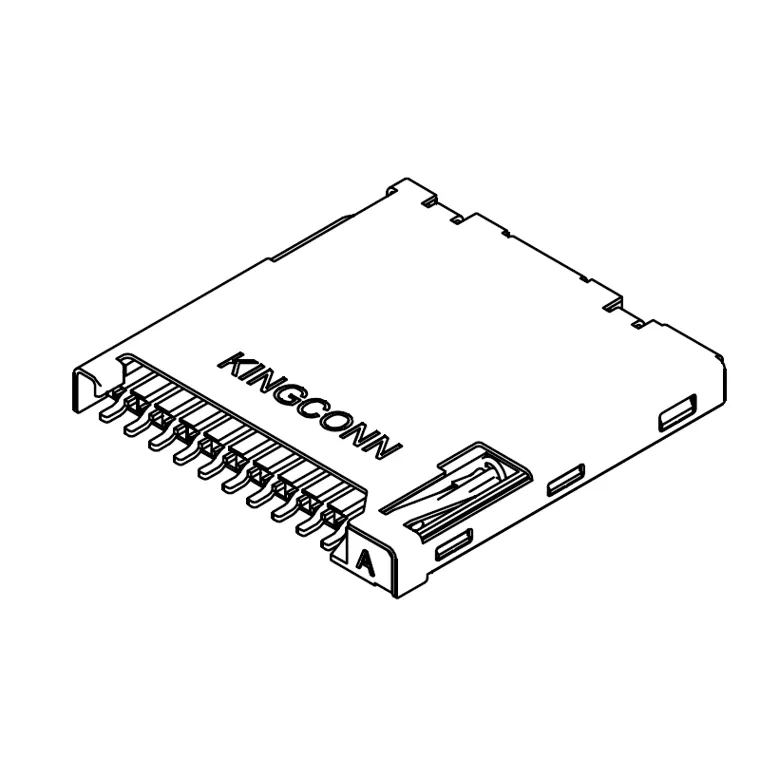 7MSDP-B0-2210microSD 10u" Push-Push Connector with post
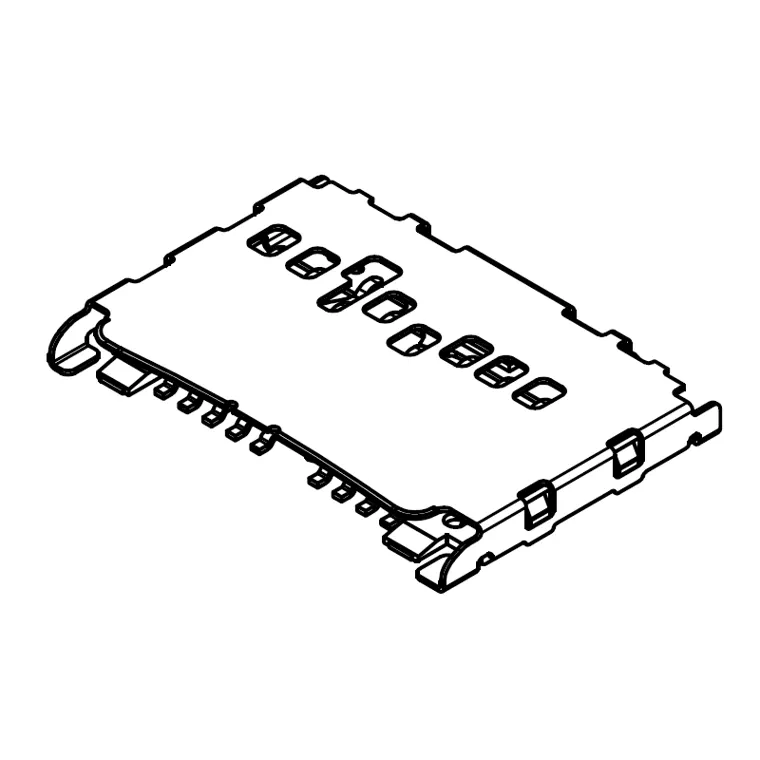 7TFCN-F0-0126Micro SD NO push H1.15mm
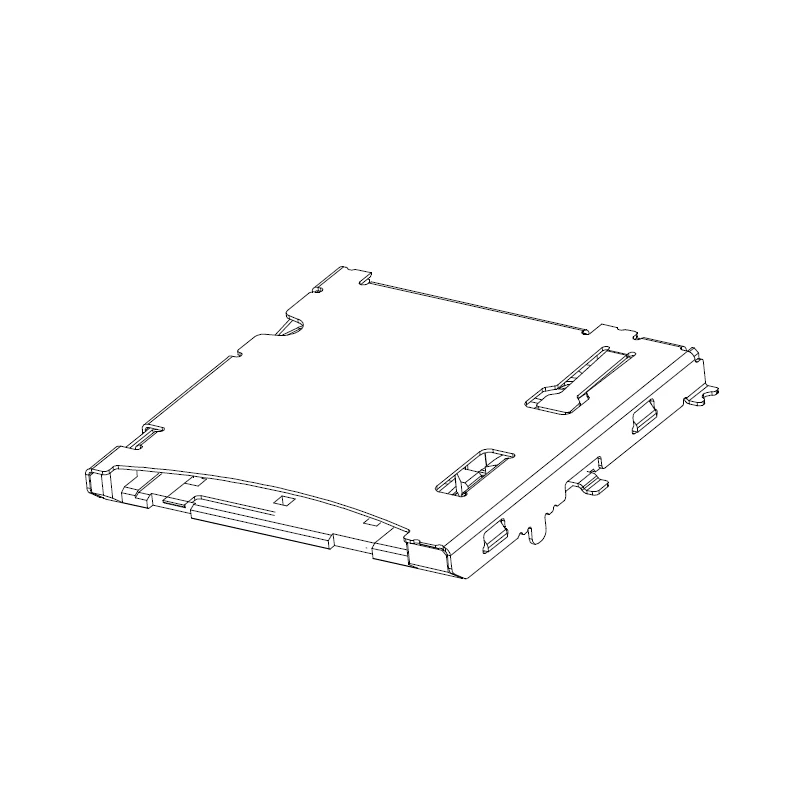 7MSDP-F0-0030MICRO SD PUSH H:1.5mm
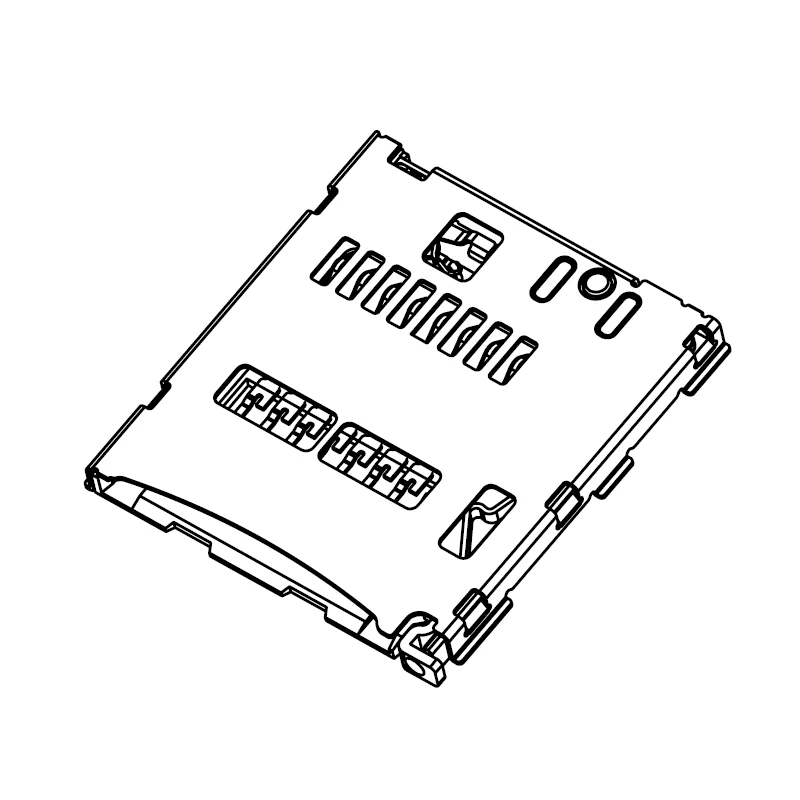 7MSDP-F0-0036Micro SD H1.45mm Push-Push Card Socket
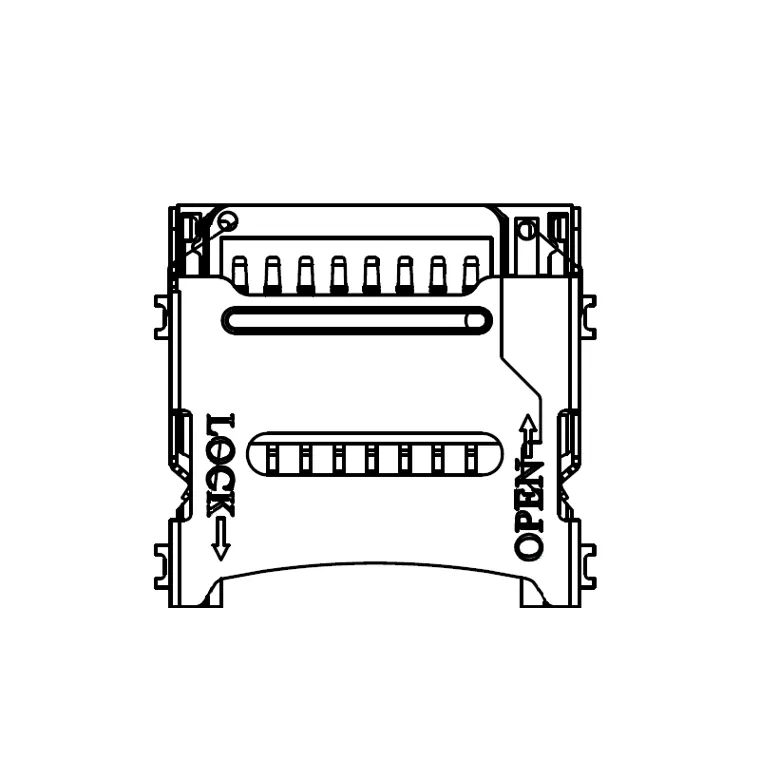 7MSDH-F0-1012Micro SD CONNECTOR HINGE TYPE
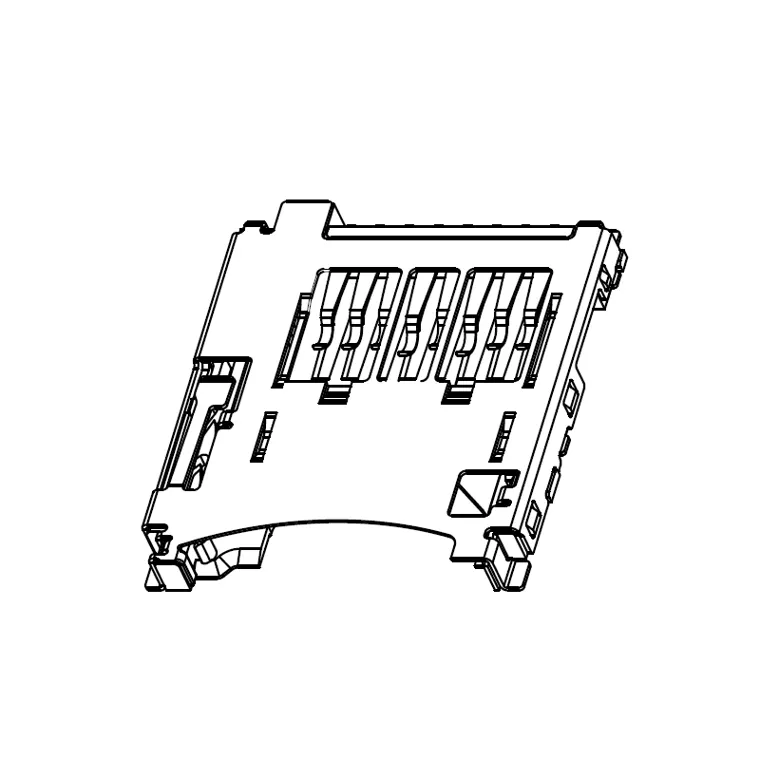 7MSDP-AA-1110Micro SD Memory Card Socket Reverse Type
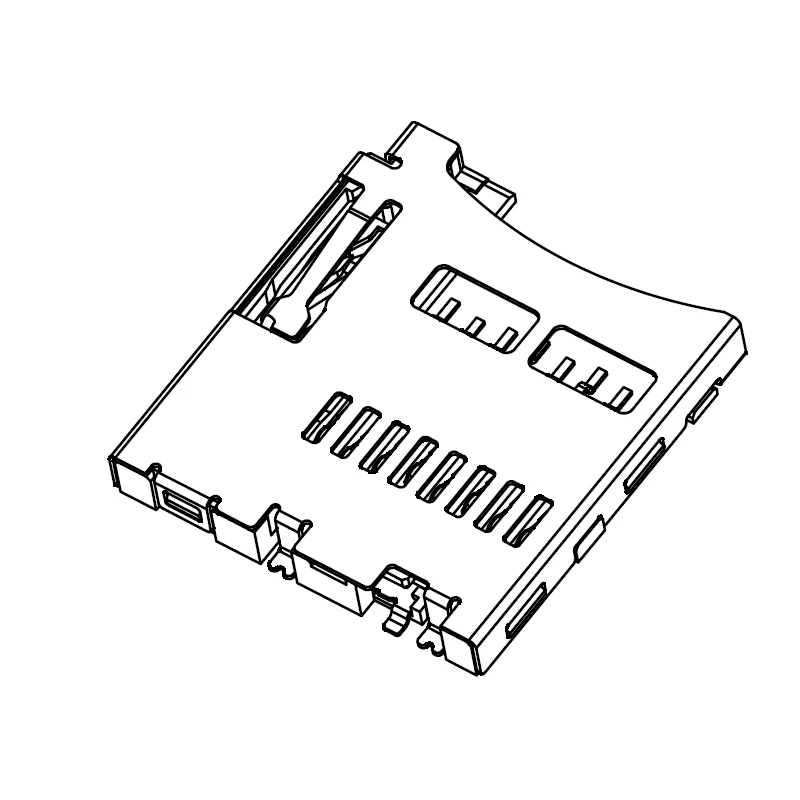 7MSDP-F0-0029Micro SD Push Socket Internally Soldered with Detect Pin
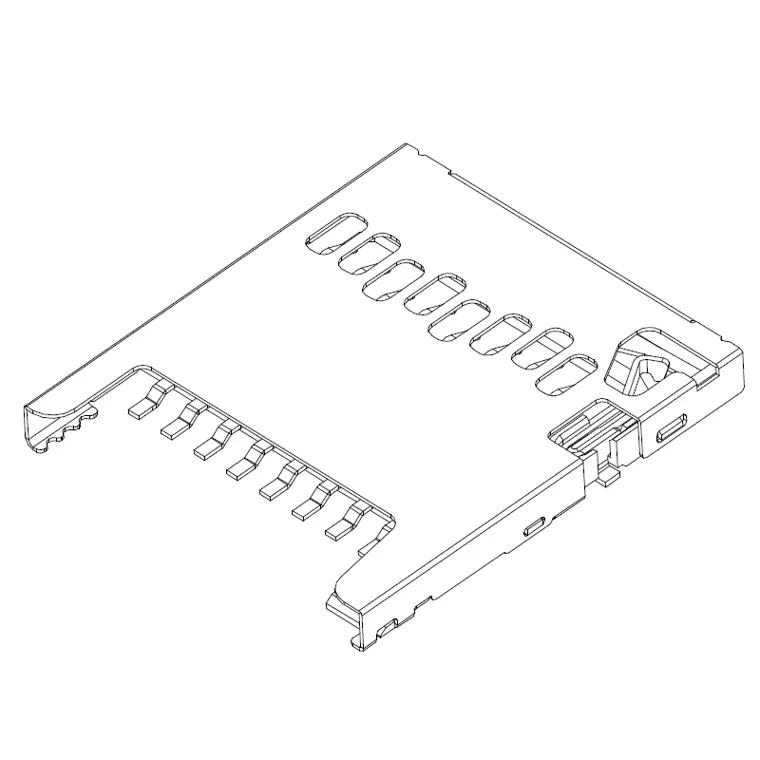 7TFCN-F0-0018MICRO SD CONN H:1.28mm
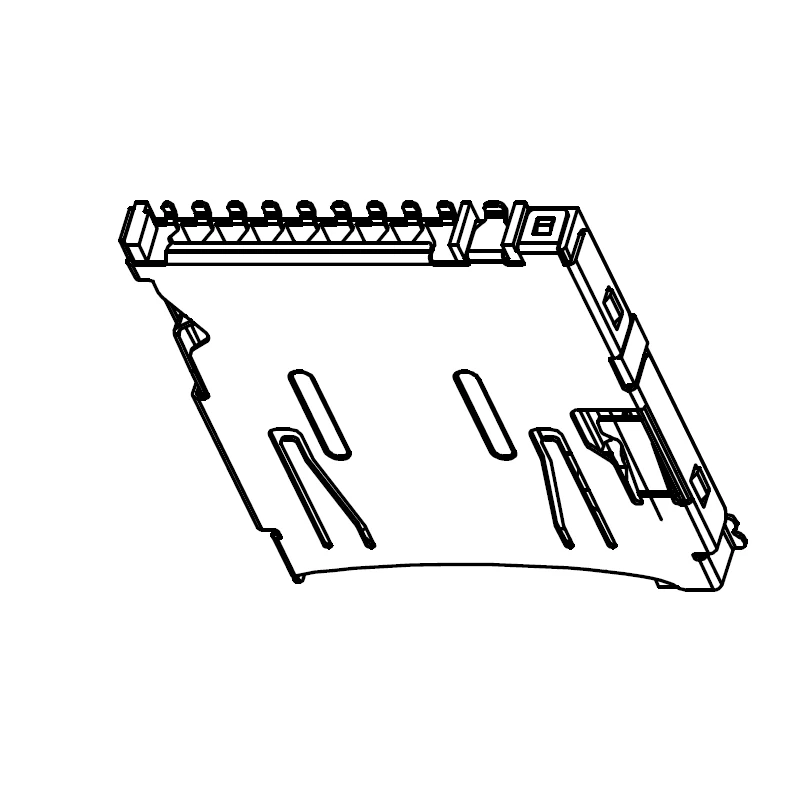 7MSDP-F0-0028Micro SD Card Socket Push-Push 1.68H
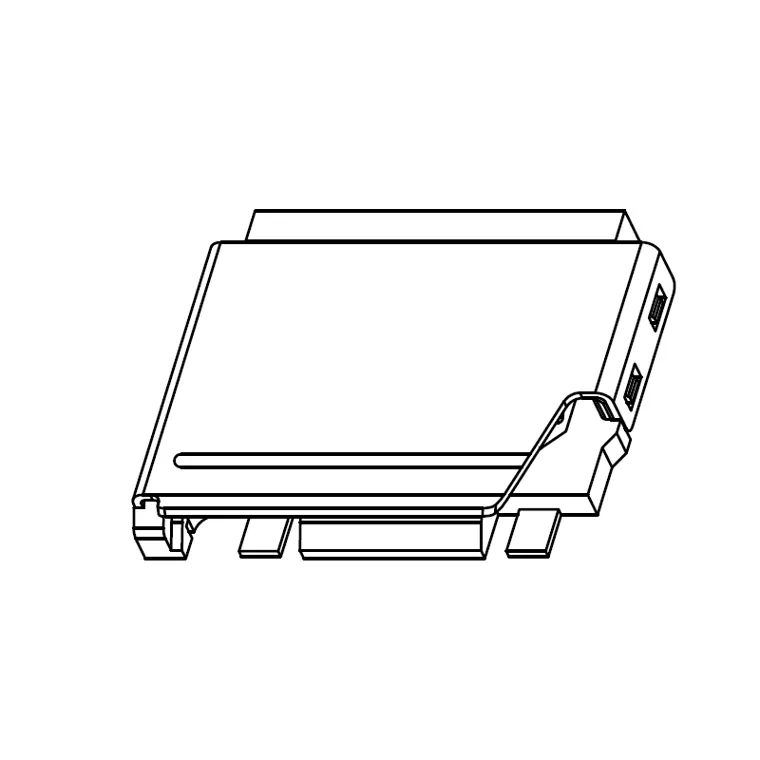 7MSDP-FA-X019MICRO SD CONN-1.75H
10 of the 19 microSD models: push-push, push-pull, hinge and reverse types across the full height range.
| Part number | Height (mm) | Contacts | Durability | Current | Withstand V | Temp. range | Drawing |
|---|---|---|---|---|---|---|---|
| 7TFCN-F0-0126 | 1.15 | 9 | 0.5 A | 500 VAC/1MINUTE | -40°C~+85°C | 7TFCN-F0-0126 | |
| 7TFCN-F0-0018 | 1.28 | 10 | 3000 | 0.5 A Max | 500V(AC) for 1 min | -25°C~+65°C | 7TFCN-F0-0018 |
| 7MSDP-F0-0037 | 1.29 | 11 | 10,000 CYCLES | 0.5A Max | 500V AC | 7MSDP-F0-0037 | |
| 7MSDP-F0-0027 | 1.45 | 5000 | 7MSDP-F0-0027 | ||||
| 7MSDP-F0-0030 | 1.5 | 0.5 A | 500 VAC/1MINUTE | -25°C~+85°C | 7MSDP-F0-0030 | ||
| 7MSDP-F0-0028 | 1.68 | 8 | 5,000 | 7MSDP-F0-0028 |
Contacts are phosphor bronze, housings rated UL94V-0, RoHS compliant. Every published specification value links back to its source engineering drawing on the part page.
Shortlist and RFQ
The Micro SD (T-Flash) series page lists all 19 models with their specifications; for the pinout and the card generations see SD card socket types and microSD generations. Model cards pre-fill an RFQ email, or reach service@kingconn.com.tw with your height limit and duty cycle and we will shortlist for you.