An FPC connector is the board-mounted socket that a flexible printed circuit or a flat flexible cable slides into. The 4 things on every drawing are contact pitch, profile height, position count and which side the contacts face. Every KINGCONN value below comes from the FPC series drawings on this site; the FFC thickness is the industry standard value.
FPC or FFC: what the connector actually receives
| Cable | What it is | Where it is used |
|---|---|---|
| FFC (Flat Flexible Cable) | parallel copper conductors laminated in film, standard 0.3 mm thickness | fixed board-to-board runs, cost first |
| FPC (Flexible Printed Circuit) | etched flexible circuit, thickness set by the stack-up | routed traces, mounted parts, controlled impedance |
The connector does not care which name is on the drawing. It cares that the tail thickness, the pitch and the exposed-conductor side match its slot. FFC arrives at a standard 0.3 mm thickness; an FPC tail is built up to the same thickness with a stiffener so it seats in the same connector.
Pitch: 0.5mm or 1.0mm
The KINGCONN FPC family covers 0.5mm and 1.0mm pitches. 0.5mm is the workhorse for display and camera-module flex cables; 1.0mm gives more forgiving flex-tail tolerance for power and lower-speed signal runs. Pitch is set by the flex, not by the board — pick the connector to match the tail you already have.
Profile height
Published profile heights run 1.0mm, 1.75mm and 2.5mm. As with any flex-to-board junction, the lower the profile, the tighter your flex-exit bend radius budget — check the flex stack thickness against the connector's slot before committing to the lowest option.
Position count
The family lists 4 up to 33 positions, in single-position steps at the low end — so a late signal add usually stays inside the same series footprint. Count signals plus grounds; a display or camera flex carries several grounds between its high-speed pairs, and the connector has to have positions for them.
Actuation and contact style
| Actuator | How the flex is held | When to use it |
|---|---|---|
| Flip-lock (ZIF) | flex inserts with no force, actuator flips down to clamp | most common; easy to service |
| Slider | actuator slides in along the insertion axis | shorter body where space is tight |
| Non-ZIF (straight insert) | spring contacts grip the flex, no actuator | lowest cost; fixed runs with few mating cycles |
Flip-lock actuators and zero-insertion-force designs are the norm in this class: the flex inserts with no force and the actuator clamps it. When comparing models, check which side the contacts face (top / bottom / dual) against your flex's exposed-conductor side — a reversed tail connects nothing and is the most common FPC field failure that is not a connector defect.
Materials and verification
Housings use LCP rated UL94-V0 with phosphor-bronze contacts, RoHS compliant, and every published value cites its source drawing on the part page.
KINGCONN FPC connectors
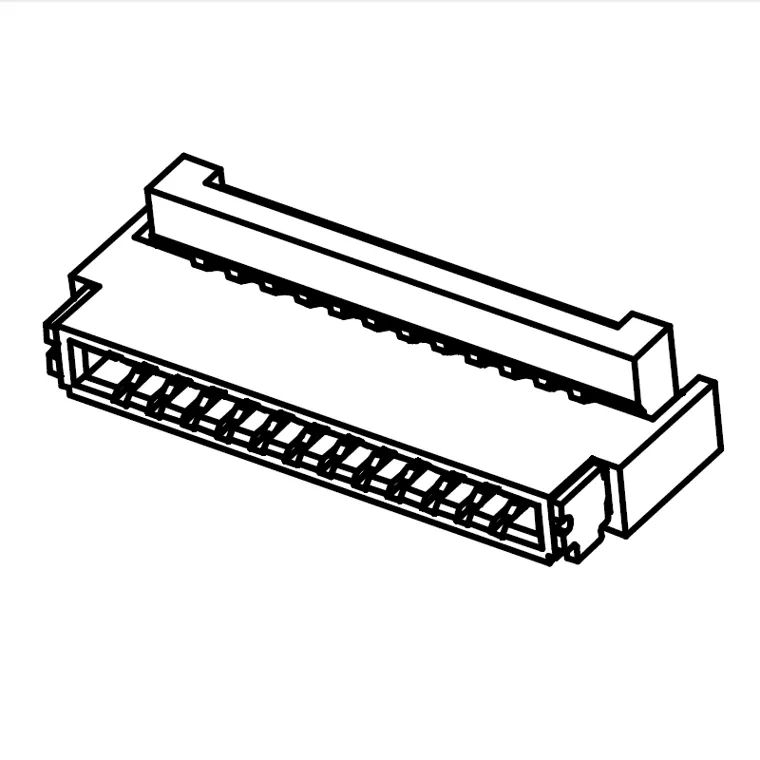 7FPC7-F0-06XXFPC 0.5mm n-Pin Connector, H=1.0mm, Front-Entry, Rear Flip
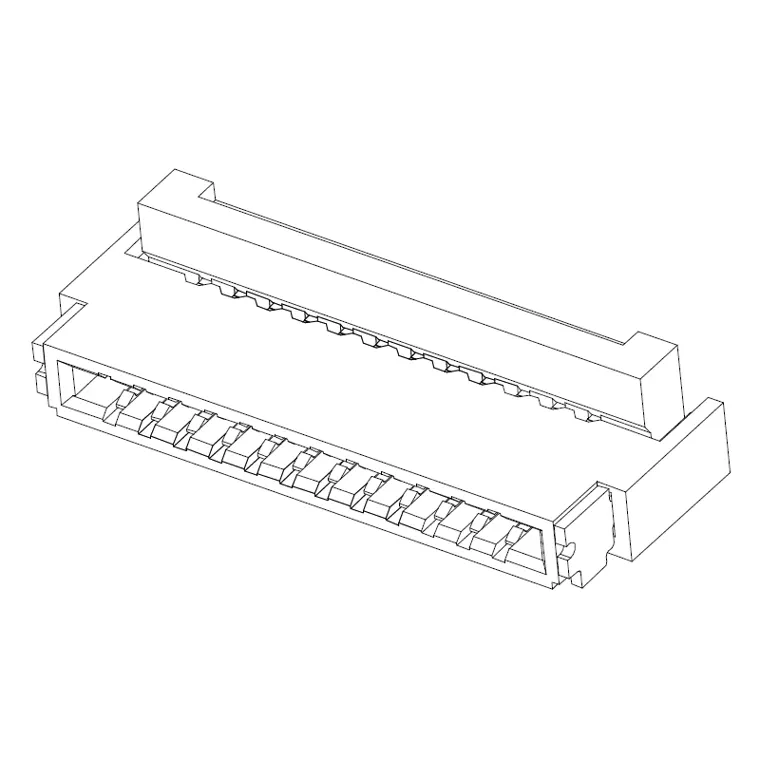 7FPC7-F0-10XXFPC 0.5mm n-Pin Connector, H=1.00mm, Front-Entry, Flip-Up
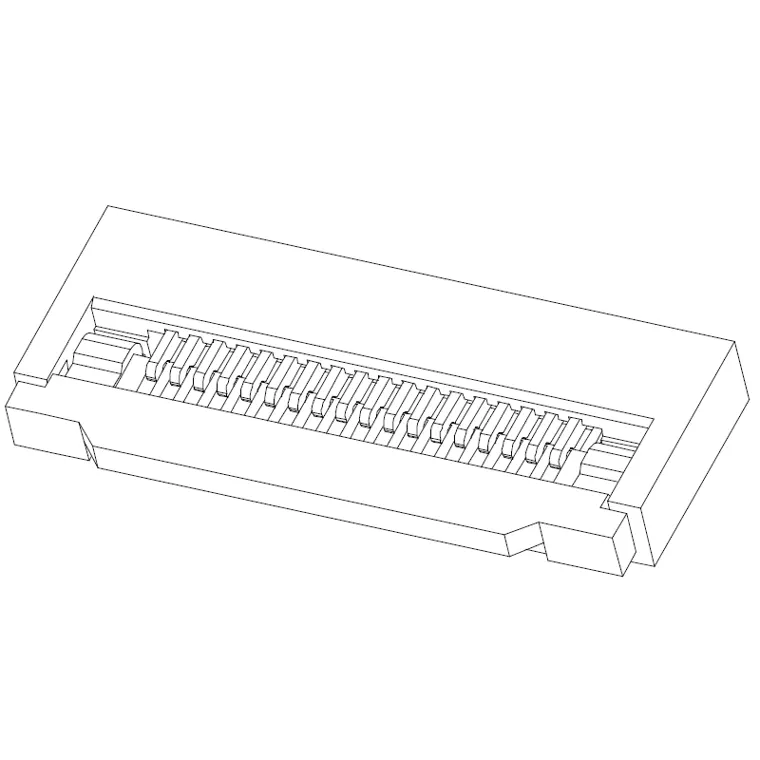 7FPC7-F0-2201-XXFPC Connector, 0.5mm Pitch, Flip-Top
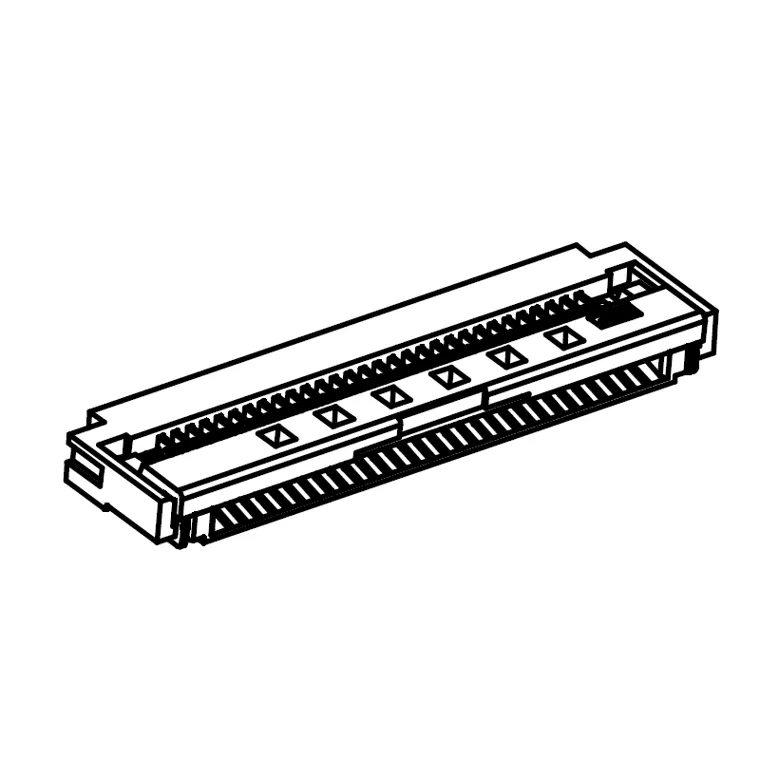 7FPC7-F0-0517550XXFPC Connector, 0.5mm Pitch, H=1.75mm, Flip-Top with Latch
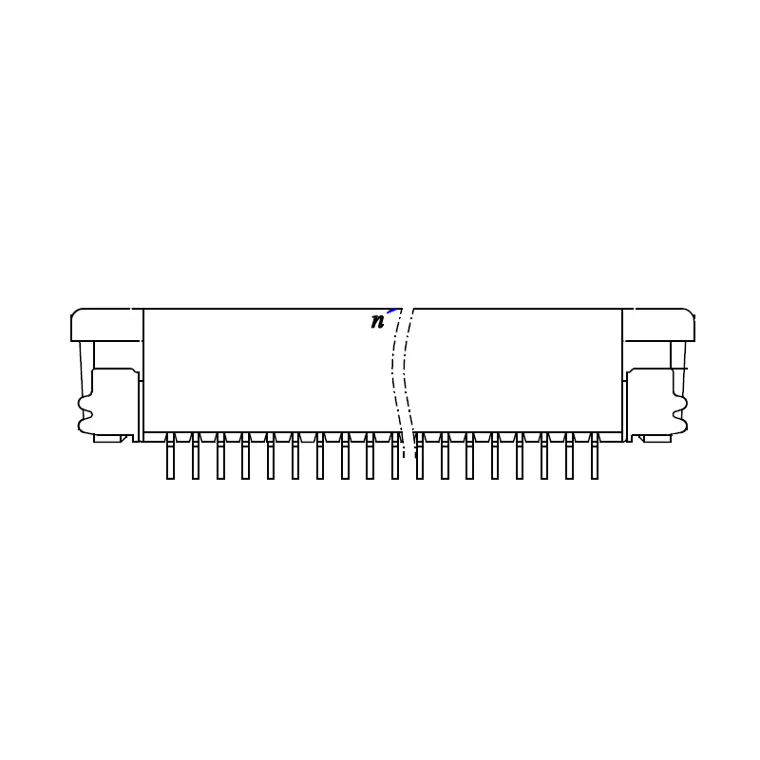 7FPC7-F0-1025XXFPC PH1.0 H2.5mm
FPC connectors at 0.5mm and 1.0mm pitch in 1.0, 1.75 and 2.5mm profiles, flip-lock and latched versions.
Shortlist and RFQ
See the FPC series page for the model-level list, read PCB connector types for when a board-to-board connector is the better fit, or email service@kingconn.com.tw with pitch, position count and stack height and we will shortlist.